Category: Uncategorized
Traditional
String Hoppers
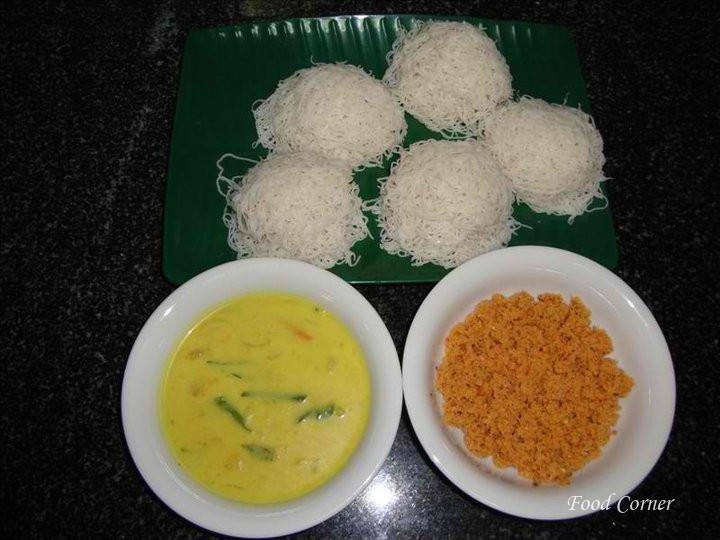
Idiyappam is culinary specialty throughout Tamilnadu, Kerala, Sri Lanka and southern areas of Karnataka. It is also a culinary staple in Sri Lanka. The name idiyappam derives from the Tamil word idi, meaning ‘broken down’, and appam, meaning “pancake”. Pronounced as e-di- ap-pam The dish is also, frequently, called noolappam or noolputtu from the Tamil/Malayalam word nool, meaning “string or thread”. In coastal areas of Karnataka like Mangalore and Udupi it is also termed semige or semé da addae in Tulu, it is eaten with Tuluva chicken and fish curries called Gassi, and also a coconut milk dish called Rasayana.[2] It is also a common breakfast item in Malaysia, where it is called putumayam, typically served with brown sugar and grated coconut.
Putu mayam in Malay or Idiyappam in Tamil is a dish from southern India. It is popular in southern India, Sri Lanka, Malaysia, Indonesia, and Singapore.
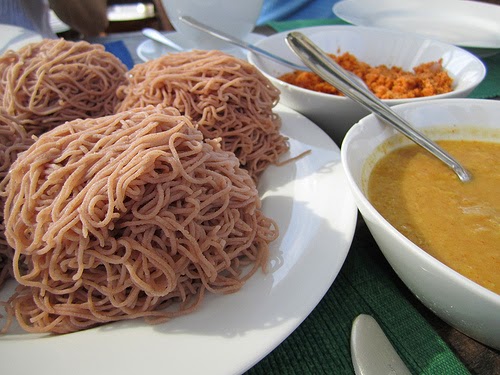
It is made of rice flour or ragi flour (Finger millet flour), salt and water. It is generally served as the main course at breakfast or dinner together with a curry (potato, egg, fish or meat curry) and coconut chutney. It is served with coconut milk and sugar in the Malabar region of Kerala. It is not usually served at lunch. In other parts of Kerala, Sri Lanka and Tamil Nadu, it is mostly eaten with spicy curries. Using wheat flour in its preparation gives it a brownish hue.
Mix rice flour with hot water, optionally add ghee, season with salt. Knead into a smooth dough. Fill an ‘idiyappam’ press or a sieve with the dough and press the noodles onto banana leaves or directly into an idli steamer.[3] Add a little grated coconut if desired. Steam for 5–10 minutes. The idiyappam is served with coconut gratings and coconut milk.[4][5][6]
Sri Lankan Roti
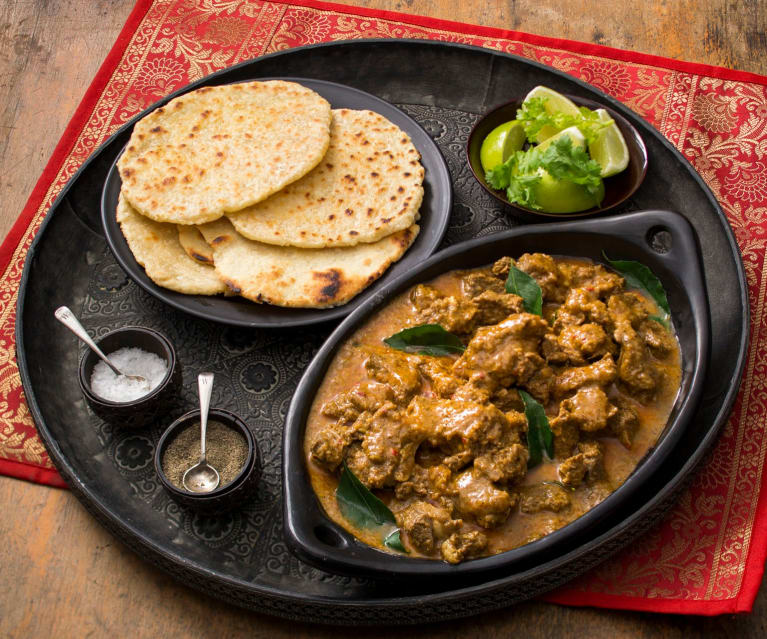
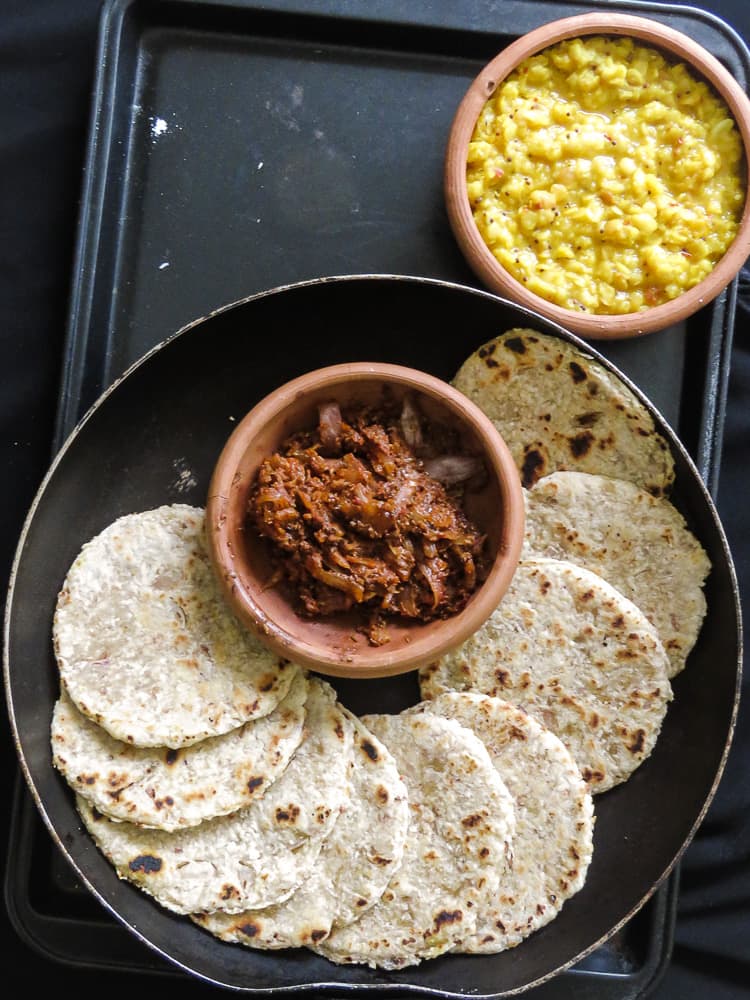
In Sri Lanka, probably the most popular[citation needed] type of roti is pol roti (coconut roti),[12] made of wheat flour, kurakkanflour, or a mixture of both, and scraped coconut. Sometimes, chopped green chillies and onion are added to the mixture before cooking. These are usually thicker and harder than other roti types. They are usually eaten with curries, or some types of sambol or lunu miris and considered a main meal rather than a supplement.
Another variety of roti popular in Sri Lanka is kottu roti,[13] which is made up of paratha or godamba roti, These are cut into small pieces,[13] small in size and rectangular or square in shape. Then on a square heating pan, vegetables and onions are fried. Eggs, cooked meat, or fish are added to fried vegetables and heated for a few minutes. Finally, the pieces of cut paratha are added. All these ingredients are mixed using two square pieces of steel. A peculiar sound is deliberately made while the mixing is done. The first person to make kottu roti is said to have made this noise to attract patrons to make them aware of the new delicacy.[citation needed] Depending upon what ingredients are used, the variations are vegetable, egg, chicken, beef, mutton, and fish kottu roti.[14] It is sometimes prepared and served as a fast food dish.[14]
Godamba roti is another variety found in Sri Lanka.[15] Plain godamba roti is eaten with curry[15] or it can also be wrapped around a savory filling.
Milk Rice
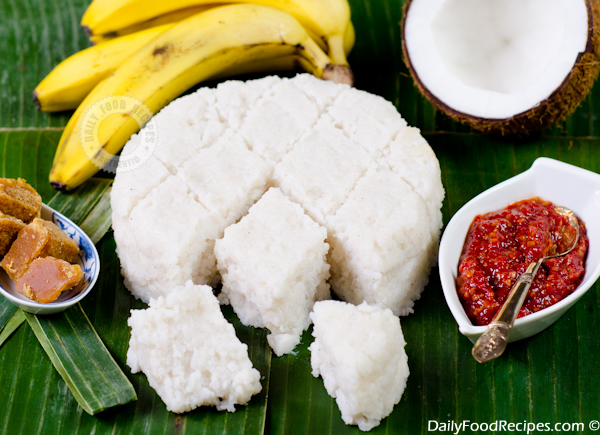
In a Sinhalese home, and during Sinhalese holidays and ceremonies kiribath plays a significant role. The dish celebrates festive or auspicious occasions and symbolises the beginning of new pursuits or transitions in life.[6] Traditionally it is also eaten by families on the first day of each month
Kiribath has a very important role for the Sinhalese in celebrating the Sinhalese New Year where it will be consumed as the first meal of the year.[8][6] At the dawn of the new year, a hearth within the household is lit by the lady of the house and the traditional pot of kiribath is boiled. Sometimes rice that has been kept especially for this occasion will be used, as this occasion requires the best rice, which is expressed in terms of taste. When the cooking is finished, after a series of observances and rituals the family begins to eat, but not before making an offering to the Buddha and gods first. The family will eat from the same rice, as if they are symbolically dining together with the Buddha and the deities. During the Sinhalese New Year, or on any other special occasion, kiribath will be served as the main dish and centrepiece of the meal. At the table, kiribath is served alongside traditional sweets like Kevum, Kokis, bananas and many other delicacies. After this, the oil lamp is lit and the first meal of the year commences.[9] The kiribath symbolises life and so it is fed to the rest of the family by the head of the family, either the father or the mother, to their progenitors for the New Year.[

About me
I am Upeksha Herath. I’m 21 years old. I live in Gampaha. I study in Nawaloka college.
 Sri Lankan Foods