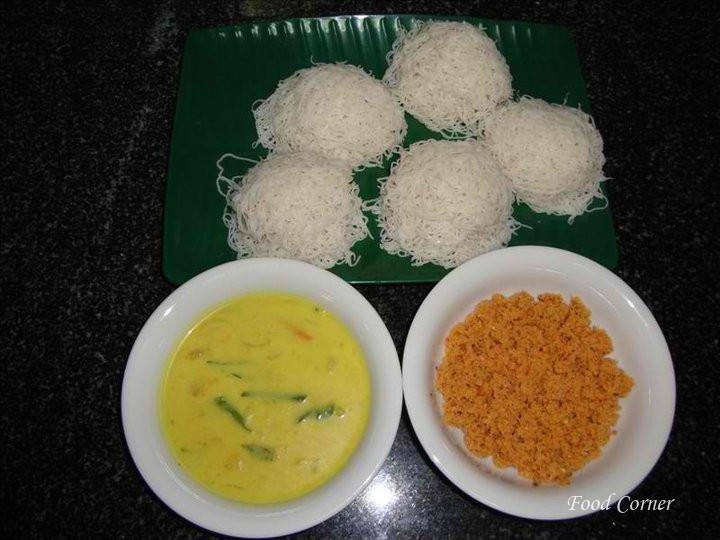
Idiyappam is culinary specialty throughout Tamilnadu, Kerala, Sri Lanka and southern areas of Karnataka. It is also a culinary staple in Sri Lanka. The name idiyappam derives from the Tamil word idi, meaning ‘broken down’, and appam, meaning “pancake”. Pronounced as e-di- ap-pam The dish is also, frequently, called noolappam or noolputtu from the Tamil/Malayalam word nool, meaning “string or thread”. In coastal areas of Karnataka like Mangalore and Udupi it is also termed semige or semé da addae in Tulu, it is eaten with Tuluva chicken and fish curries called Gassi, and also a coconut milk dish called Rasayana.[2] It is also a common breakfast item in Malaysia, where it is called putumayam, typically served with brown sugar and grated coconut.
Putu mayam in Malay or Idiyappam in Tamil is a dish from southern India. It is popular in southern India, Sri Lanka, Malaysia, Indonesia, and Singapore.
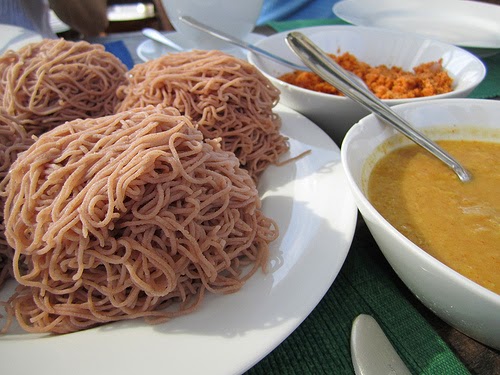
It is made of rice flour or ragi flour (Finger millet flour), salt and water. It is generally served as the main course at breakfast or dinner together with a curry (potato, egg, fish or meat curry) and coconut chutney. It is served with coconut milk and sugar in the Malabar region of Kerala. It is not usually served at lunch. In other parts of Kerala, Sri Lanka and Tamil Nadu, it is mostly eaten with spicy curries. Using wheat flour in its preparation gives it a brownish hue.
Mix rice flour with hot water, optionally add ghee, season with salt. Knead into a smooth dough. Fill an ‘idiyappam’ press or a sieve with the dough and press the noodles onto banana leaves or directly into an idli steamer.[3] Add a little grated coconut if desired. Steam for 5–10 minutes. The idiyappam is served with coconut gratings and coconut milk.[4][5][6]

 Sri Lankan Foods