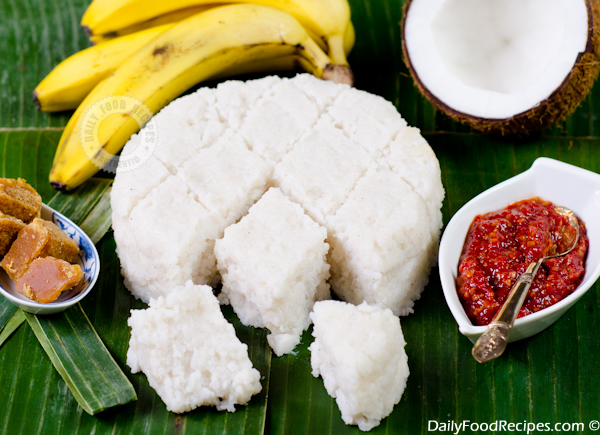
In a Sinhalese home, and during Sinhalese holidays and ceremonies kiribath plays a significant role. The dish celebrates festive or auspicious occasions and symbolises the beginning of new pursuits or transitions in life.[6] Traditionally it is also eaten by families on the first day of each month
Kiribath has a very important role for the Sinhalese in celebrating the Sinhalese New Year where it will be consumed as the first meal of the year.[8][6] At the dawn of the new year, a hearth within the household is lit by the lady of the house and the traditional pot of kiribath is boiled. Sometimes rice that has been kept especially for this occasion will be used, as this occasion requires the best rice, which is expressed in terms of taste. When the cooking is finished, after a series of observances and rituals the family begins to eat, but not before making an offering to the Buddha and gods first. The family will eat from the same rice, as if they are symbolically dining together with the Buddha and the deities. During the Sinhalese New Year, or on any other special occasion, kiribath will be served as the main dish and centrepiece of the meal. At the table, kiribath is served alongside traditional sweets like Kevum, Kokis, bananas and many other delicacies. After this, the oil lamp is lit and the first meal of the year commences.[9] The kiribath symbolises life and so it is fed to the rest of the family by the head of the family, either the father or the mother, to their progenitors for the New Year.[


 Sri Lankan Foods